Understanding asbestos in building materials
What asbestos is and how it was used in construction
Hidden in plain sight, the legacy of asbestos still threads through South Africa’s older buildings. From factories to homes, this fibre once offered fire resistance, durability, and easy workability. Its enduring presence invites curiosity about what lies inside our ceilings and walls.
Understanding asbestos in building materials means recognizing how it was woven into everyday life. Materials like ceiling tiles with asbestos were prized for their strength and insulation, yet their fibres can become hazardous when disturbed.
- Ceiling tiles in older schools, offices, and homes
- Pipe lagging and sprayed coatings
- Insulation boards and textured plasters
These materials were commonly installed before strict regulations, and their history helps explain why many buildings still contain asbestos today.
Common forms of asbestos found in old ceiling tiles
Ceilings whisper histories in South Africa’s aging spaces, and the fibres linger where we least expect them. I’ve walked through many of these spaces and felt that history overhead. It’s palpable. Understanding asbestos in building materials helps explain why some environments still conceal a quiet hazard—especially the ceiling tiles with asbestos that once offered fire resistance and ease of manufacture. Their presence links schools, offices, and homes in a shared, uneasy past.
- Chrysotile (white asbestos) in vinyl or plaster tiles
- Amosite (brown asbestos) in insulation boards and coatings
- Crocidolite (blue asbestos) in textured plasters and sprays
These forms remind us why many ceilings require careful assessment by specialists, and why the topic remains a shared responsibility for property owners and communities.
Health risks and exposure pathways
Overhead, the quiet hazard of asbestos hides in plain sight. In many South African spaces, fibers released from aging ceiling tiles with asbestos drift into the air, sparking health concerns long after construction has faded from memory. Health risks span asbestosis, mesothelioma, and lung cancer, especially for those exposed repeatedly or during renovations.
Exposure commonly occurs when materials are disturbed, releasing fibers into the air.
- Renovation, drilling, sanding, or cutting of features that contain the tiles
- Water damage or aging that crumbles plaster and releases powdery debris
- Dust and fibers circulating through ventilation systems to adjacent rooms
Where ceiling tiles with asbestos linger, vigilance and professional assessment become a shared responsibility for SA property owners and communities, a subtle reminder that history overhead still asks for careful stewardship.
Overview of laws and safety regulations governing asbestos
Across South Africa, more than a quarter of older homes and public buildings still carry asbestos-containing materials overhead, a hidden history that quietly shapes how we live in towns and on farms. When ceiling tiles with asbestos endure the test of time, the risk travels in the air we share and the rooms we gather in.
Understanding the legal framework helps owners navigate this delicate issue with care. Safety regulations emphasize prevention, professional handling, and proper disposal to protect communities and workers.
- Licensed removal by trained contractors
- Mandatory training and PPE for personnel
- Air monitoring and clearance testing where applicable
- Disposal at licensed facilities under environmental controls
- Documentation and reporting requirements for projects
These rules are not about erasing the past but about stewarding it—honouring homes, schools, and rural spaces where ceiling tiles with asbestos once loomed, while safeguarding health.
Identifying asbestos-containing ceiling tiles
Visual indicators and aging patterns
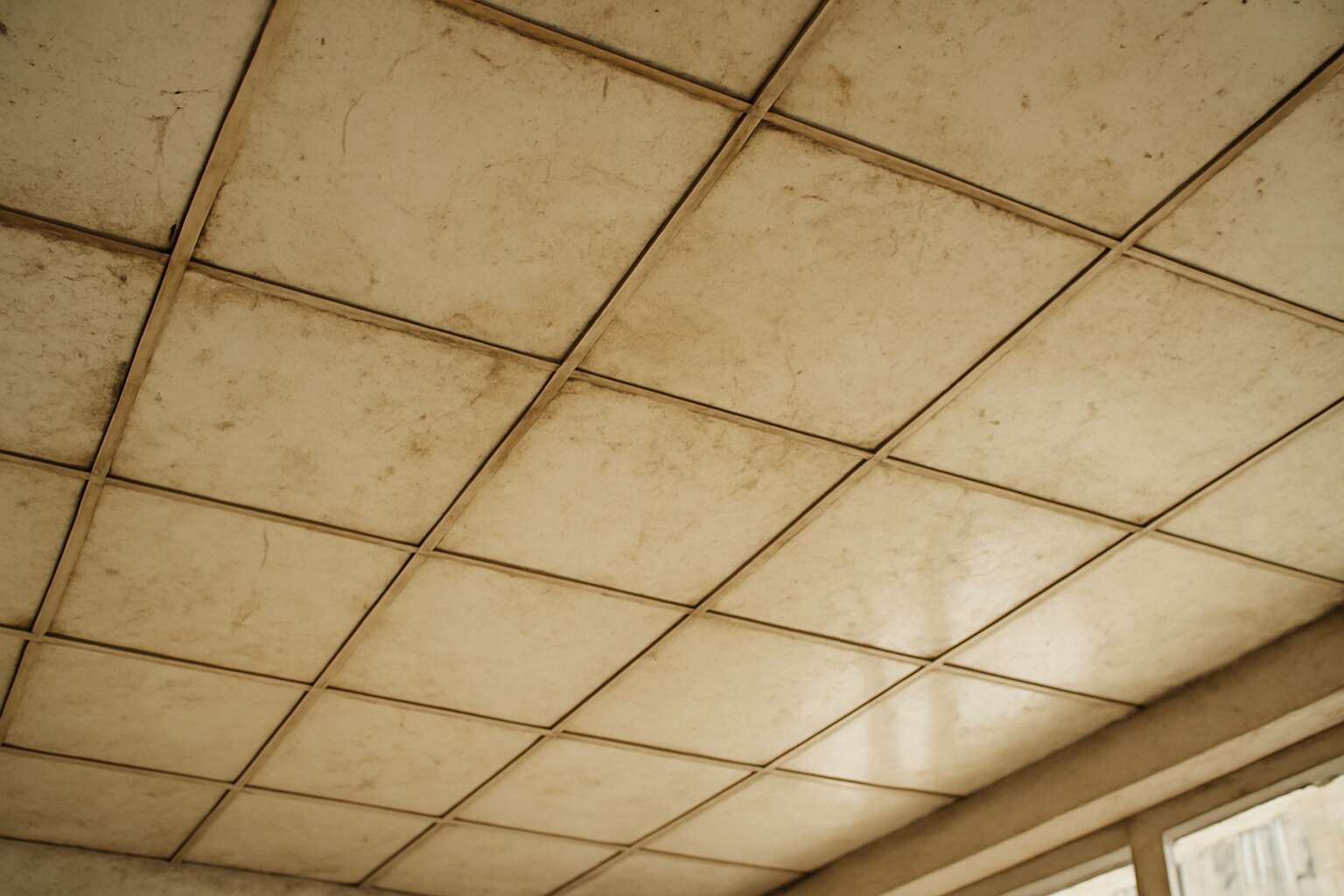
In older South African buildings, ceiling tiles with asbestos linger like echoes of a bygone era, their subtle seams hinting at a mineral memory buried in plaster and time.
Visual indicators and aging patterns to note include the following:
- Yellowing or brown staining along panel edges
- Fine chalky dust or frayed edges at joints
- Cracks that run in irregular, spiderweb patterns
As these tiles age, textures dull, fibrous fibers may feel brittle, and the overall appearance can become a map of past construction choices. The signs tell a story, inviting professional assessment rather than guesswork!
How to confirm presence with testing
In South Africa’s aging interiors, ceiling tiles with asbestos whisper from the corners of memory. A safety maxim guides us: “Never ignore the signs above your head.” Identifying presence requires more than intuition—testing reveals the truth.
- Lab analysis via polarized light microscopy (PLM)
- Clear identification of asbestos type and presence
- Professional reporting and risk guidance
Confirmation rests with accredited laboratories and licensed assessors. They collect samples under controlled conditions and submit them for analysis, often with polarized light microscopy to identify asbestos fibers. The final report documents material, concentration, and recommended precautions, aligning with SA safety regulations.
Until a professional confirms it, treat suspected tiles with respect—disturbance is a temptation best avoided.
When to treat a tile as asbestos-containing
In South Africa’s aging interiors, the ceiling tiles with asbestos whisper from the corners of memory. “Never ignore the signs above your head,” a safety maxim reminds us. Identifying asbestos-containing ceiling tiles isn’t guesswork—it’s care, guided by trained eyes and professional assessment rather than rumor.
- Age and era of installation align with common asbestos-containing products
- Surface wear, chalky dust, or a fibrous appearance when disturbed
- Finish resembling vinyl-asbestos composites or plain grey boards
For certainty, confirmation rests with accredited laboratories and licensed assessors who collect samples under controlled conditions and submit them for analysis. The final report documents material, concentration, and recommended precautions, aligning with SA safety regulations. Until then, treat suspected ceiling tiles with asbestos with respect and avoid disturbance.
Common myths and misperceptions about asbestos tiles
In South Africa’s aging interiors, memory lurks in the ceiling. A single tile can carry more history—and risk—than its surface betrays. Identifying ceiling tiles with asbestos isn’t guesswork; it’s a careful art guided by trained eyes and professional assessment. The maxim still rings true: never ignore the signs above your head. Silence around these tiles can hide more than it reveals.
Common myths endure, shaping fear more than facts. The truth is more measured and urgent than urban legends:
- Myth: asbestos is always obvious by color or texture.
- Myth: any exposure will instantly trigger harm, so it’s all or nothing.
- Myth: covering tiles hides the risk forever without consequence.
Reality invites restraint and respect. Ceiling tiles with asbestos require official confirmation by accredited laboratories and licensed assessors; only their findings turn assumptions into policy and protection. In a world where memory and safety collide, clarity is the only mercy.
Safe handling, removal, and containment
Risk assessment and timing
Across South Africa, ceiling tiles with asbestos still cast a long shadow over older buildings. Safe handling, removal, and containment require a guarded, evidence-based approach and respect for the regulations that govern work around asbestos. I’ve watched projects stall when haste trumps due diligence, and that’s a costly lesson.
- Material condition and potential fibre release
- Building usage, occupancy and exposure risk
- Regulatory timing, approvals, and professional oversight
In risk assessment and timing, context matters more than technical bravado. Decisions hinge on the interplay between safety margins, project pressure, and legal compliance, ensuring that any engagement with these tiles is measured and informed rather than reactive.
Professional abatement versus DIY options
Better to pause now than pay later—this sentiment echoes through South Africa’s aging skylines, where ceiling tiles with asbestos still cast long shadows over daily life. Safe handling, containment, and responsible removal hinge on a disciplined, evidence-based approach that respects the law and the people who share these spaces.
- Licensed abatement teams undertake professional containment and controlled removal practices
- Air monitoring and licensed waste disposal ensure regulatory compliance
- DIY removal is discouraged due to health risks and potential penalties
Professional abatement provides oversight, engineered containment, and post-removal air testing, reducing the chance of fibre release. DIY options, in turn, are fraught with safety concerns and regulatory hurdles, often failing to meet South Africa’s safety standards and waste-management requirements.
Containment practices during work
<p Across South Africa's aging skylines, a quiet peril lingers in the ceiling: ceiling tiles with asbestos. 'Safe handling now saves lives later,' a refrain you hear in project rooms and boardrooms alike. Safe handling, containment, and responsible removal hinge on a disciplined, evidence-based approach that respects the law and the people who share these spaces.
Licensed abatement teams undertake engineered containment and controlled removal practices; air monitoring and licensed waste disposal ensure regulatory compliance. DIY removal is discouraged due to health risks and penalties.
- Negative-pressure containment to deter fibre drift
- HEPA filtration and ongoing air monitoring for visibility
- Sealed, labelled waste bags and licensed disposal pathways
Professional oversight provides a safeguard against exposure, transforming a delicate task into a measured act of care.
Personal protective equipment and hygiene
The dust you can’t see is the danger you can’t ignore. In many older South African buildings, ceiling tiles with asbestos hover above daily life, quietly shaping risk as disturbance turns micro-particles into airborne threats. Respect for this material begins with recognition: containment is a matter of integrity, not improvisation.
Safe handling and containment hinge on minimizing disturbance and preserving the surrounding air. A concise PPE framework supports that aim.
- Respiratory protection appropriate to the risk
- Protective clothing and disposable coveralls
- Gloves and eye protection
Hygiene practices and waste discipline reflect an ethical duty to workers and occupants. Decontamination, controlled access, and strict disposal culture align with South Africa’s safety ethos and regulatory expectations, reinforcing that protection is collective rather than personal.
Waste disposal, labeling, and regulatory requirements
Safe handling, removal, and containment hinge on disciplined waste discipline and precise labeling. In South Africa, the quiet hazard of ceiling tiles with asbestos becomes an audible warning when disturbed, turning invisible dust into a tangible threat. Containment and labeling standards must be observed as part of the routine of responsible property management.
- Clear labeling and warning notices on storage and transport containers to deter accidental disturbance
- Waste packaging that is sealed and leak-proof to prevent fibre release
- Documentation and cradle-to-grave records for disposal at licensed facilities
Regulatory requirements in South Africa mandate licensed personnel for any handling, with strict disposal at approved facilities and a clear waste manifest that traces every transfer.
Modern alternatives and prevention strategies
Replacing old tiles with safer materials
A quiet, shadowy rumor sits above many South African ceilings—a tile that once promised light now hums with unspoken risk. Modern alternatives rise like dawn, offering safer materials that keep the room breathable while preserving character and craft!
- Mineral fibre ceiling tiles that are certified asbestos-free and designed for durability
- PVC ceiling panels offering clean lines and moisture resistance
- Gypsum board ceilings for smooth, adaptable finishes
- Aluminium or steel panels for a minimalist, resilient look
In South Africa, choosing these safer options isn’t just aesthetics—it’s protection for occupants and craftsmen alike. Prevention strategies hinge on professional oversight, certified testing, and adherence to local regulations, ensuring a space that feels alive rather than haunted.
If the project encounters ceiling tiles with asbestos, trust licensed specialists to assess, contain, and restore the ceiling’s integrity, keeping safety at the summit of every decision.
Encapsulation and stabilization methods
Every ceiling tile with asbestos hides a quiet risk that grows louder the moment you disturb it. In South Africa, the safe path forward starts with clear, protective choices for both occupants and tradespeople—especially if you still have ceiling tiles with asbestos above your heads.
Modern alternatives rise to replace old assets. Mineral fibre tiles that are certified asbestos-free offer durability; PVC panels resist moisture; gypsum boards give smooth, adaptable finishes; aluminium or steel panels deliver a minimalist, resilient look. They preserve room character, while we improve air quality and maintenance.
Prevention strategies hinge on encapsulation and stabilization, guided by licensed professionals. Encapsulation seals the fibres in place with approved sealants, and we anchor tiles to the structure to prevent release during routine vibrations or future renovations. These approaches protect occupants without the disruption of complete removal.
- Contain fibres and protect air
- Minimise dust and disruption
- Preserve aesthetics during management
Budgeting, timelines, and project planning
Modern alternatives rise to replace old assets. Mineral fibre tiles certified asbestos-free offer durability; PVC panels resist moisture; gypsum boards give smooth, adaptable finishes; aluminium or steel panels deliver a minimalist, resilient look. For spaces in South Africa where ceiling tiles with asbestos loom, choice becomes safety and style.
Prevention and planning weave a hopeful tale. Encapsulation and stabilization remain prudent anchors while budgets and timelines keep the project grounded. A careful approach minimizes disruption, preserves aesthetics, and maintains healthy air quality as the upgrade unfolds.
- Budgeting: estimate scope, contingencies, and long-term savings.
- Timelines: align with occupancy and maintenance windows.
- Planning: secure approvals, contractors, and material lead times.
- Communication: keep stakeholders informed and engaged.
This planning thread helps ensure the transition respects heritage of space while meeting modern safety standards.
Choosing a qualified contractor
In South Africa, ceiling tiles with asbestos have moved from fear to foresight. Modern options now rule: mineral fibre tiles are asbestos-free, PVC panels resist moisture, gypsum boards offer smooth finishes, and aluminium or steel panels read as minimalist and durable. For spaces still haunted by asbestos, safety and style align.
Prevention and planning guide the way. Encapsulation and stabilization stay sensible anchors, while budgets and timelines remain realistic. A careful approach trims disruption and preserves aesthetics, keeping air quality intact as upgrades unfold.
When choosing a contractor, look for clear criteria that translate heritage into safe, stylish upgrades.
- Licensed asbestos safety-certified professionals with SA experience
- Written safety plans, PPE policies, and on-site controls
- Proof of insurance, references, and disposal compliance
The right partner makes safety and aesthetics sing in harmony, without drama.

0 Comments